PLM vs ERP: What’s the Difference and Why It Matters
ByxLM Solutions
A clear breakdown of how PLM and ERP differ, where they connect, and why integration is essential for modern manufacturing.
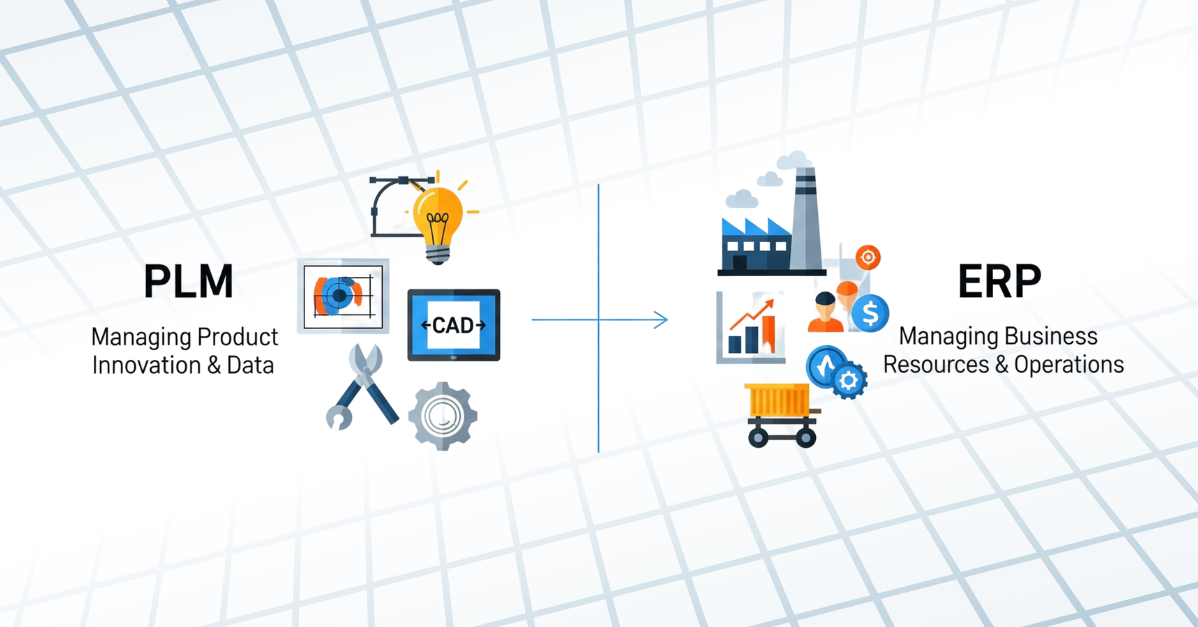
In the world of digital manufacturing, PLM and ERP systems are often mentioned in the same conversations. Both are essential for efficient operations—but they’re designed to do very different things. Understanding the difference between Product Lifecycle Management (PLM) and Enterprise Resource Planning (ERP) is critical for any company trying to improve speed, accuracy, and collaboration across the product lifecycle.
What Is PLM?
PLM software is focused on managing the product itself—its design, engineering, documentation, and ongoing evolution. It’s where product data lives, where changes are tracked, and where engineering teams collaborate. Key functions of PLM include:- Managing CAD data and file versions
- Controlling engineering changes (ECRs, ECOs)
- Creating and managing Bills of Materials (BOMs)
- Creating digital threads by linking product data across different functions and systems
What Is ERP?
ERP software, on the other hand, manages business operations—things like inventory, procurement, accounting, logistics, and production scheduling. Key ERP functions include:- Materials planning and procurement
- Manufacturing execution and shop floor control
- Inventory and warehouse management
- Order fulfillment and financial reporting