How Business Process Management in 3DEXPERIENCE Can Improve Work Across Your Organization
ByMarc Young
In a recent xLM Solutions webinar, Marc Young explored how companies can use Business Process Management in 3DEXPERIENCE and other PDM, PLM and enterprise systems to bring more structure, visibility, and automation to repeatable business processes.

For many organizations, process improvement conversations start in engineering especially when dealing with companies implementing, configuring or enhancing their PLM system. This makes sense as engineering teams rely on clear approvals, controlled workflows, and strong data management to keep work moving. But we also discussed in a recent webinar, the value of process management goes far beyond engineering alone. With the right approach, companies can use Business Process Management (BPM) to support processes across departments, connect people to the right information at the right time, and reduce the delays and confusion that often come from email-based or manual coordination. If you missed the live webinar, the recording is now available to watch on demand.
Why Process Management Matters
One of the biggest takeaways from the webinar was that inefficient processes create real business risk. When work depends on emails, tribal knowledge, or informal handoffs, it becomes harder to track status, keep projects moving, and improve performance over time. We walked through several of the common challenges organizations face when processes are not well managed, including:- Unclear ownership of tasks
- Delays caused by missed emails or follow-ups
- Limited visibility into where something stands
- Overreliance on specific individuals who “know how it works”
- Difficulty measuring cycle times and identifying bottlenecks
BPM Is Not Just for Engineering
Since we work so closely with PLM and engineering-driven organizations, many of the companies we speak to naturally think about BPM in the context of engineering workflows. There’s nothing wrong with that, but there’s also a greater opportunity to consider. BPM can absolutely be used to enhance engineering-related activities such as BOM reviews, simulation approvals, supplier validation, transmittals, and engineering change processes… but it can also support business processes outside of engineering, or processes that span multiple teams. During the webinar, we explored examples such as:- Employee onboarding
- NDA approvals
- Expense approval workflows
- Sales request and quoting processes
- Deviation management on the shop floor
- Vendor drawing and document review
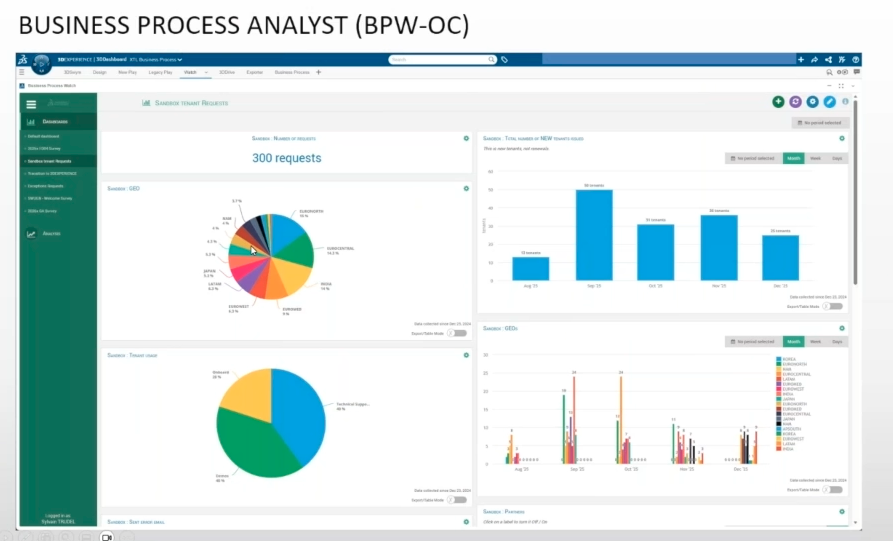
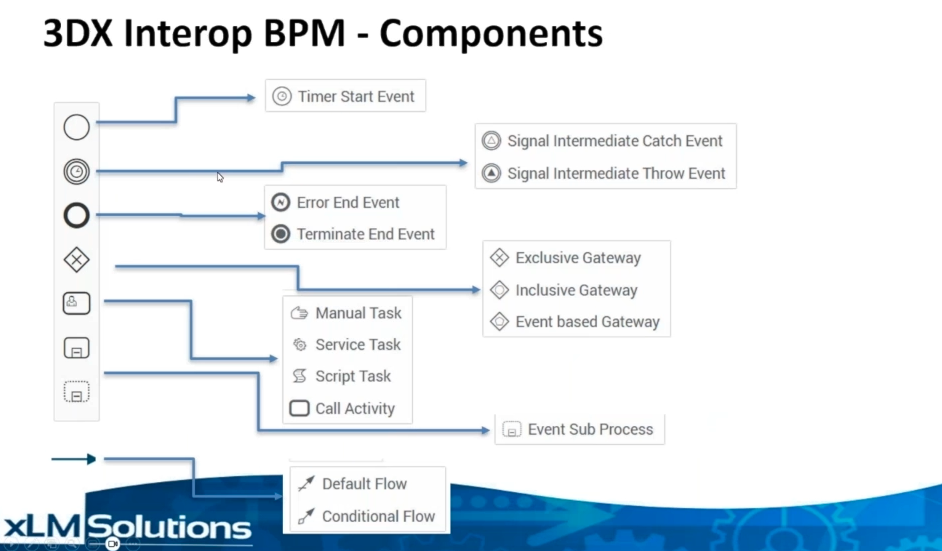
Unpacking xLM’s ITEROP Demo
A major part of the webinar focused on showing BPM in action. We walked through two examples that helped illustrate both the usability and the power of the tool. The first example showed a component requisition process. An engineer initiated the request, logistics reviewed supplier and timing considerations, purchasing uploaded the purchase order, and the workflow tracked delivery back to the original requester. Along the way, the process used forms, logic, wait states, reminders, and file attachments to keep everything organized and moving. The second example demonstrated an engineering change approval process tied directly to 3DEXPERIENCE. In this case, promoting a document to a specific maturity state automatically triggered the workflow. The process then routed the task through review and approval steps, locked manual promotion outside the workflow, and finally released the document only after the process had been completed successfully. As the example used a document object, any 3DX object like a Physical Product, Drawing, Bill of Material (BOM), etc., could also be used within the BPM/Interop – 3DX Release process. Together, these examples showed that BPM is not just about drawing flowcharts. It is about turning those flowcharts into working processes that can guide users, enforce business rules, maintain traceability, and connect directly to the platform.